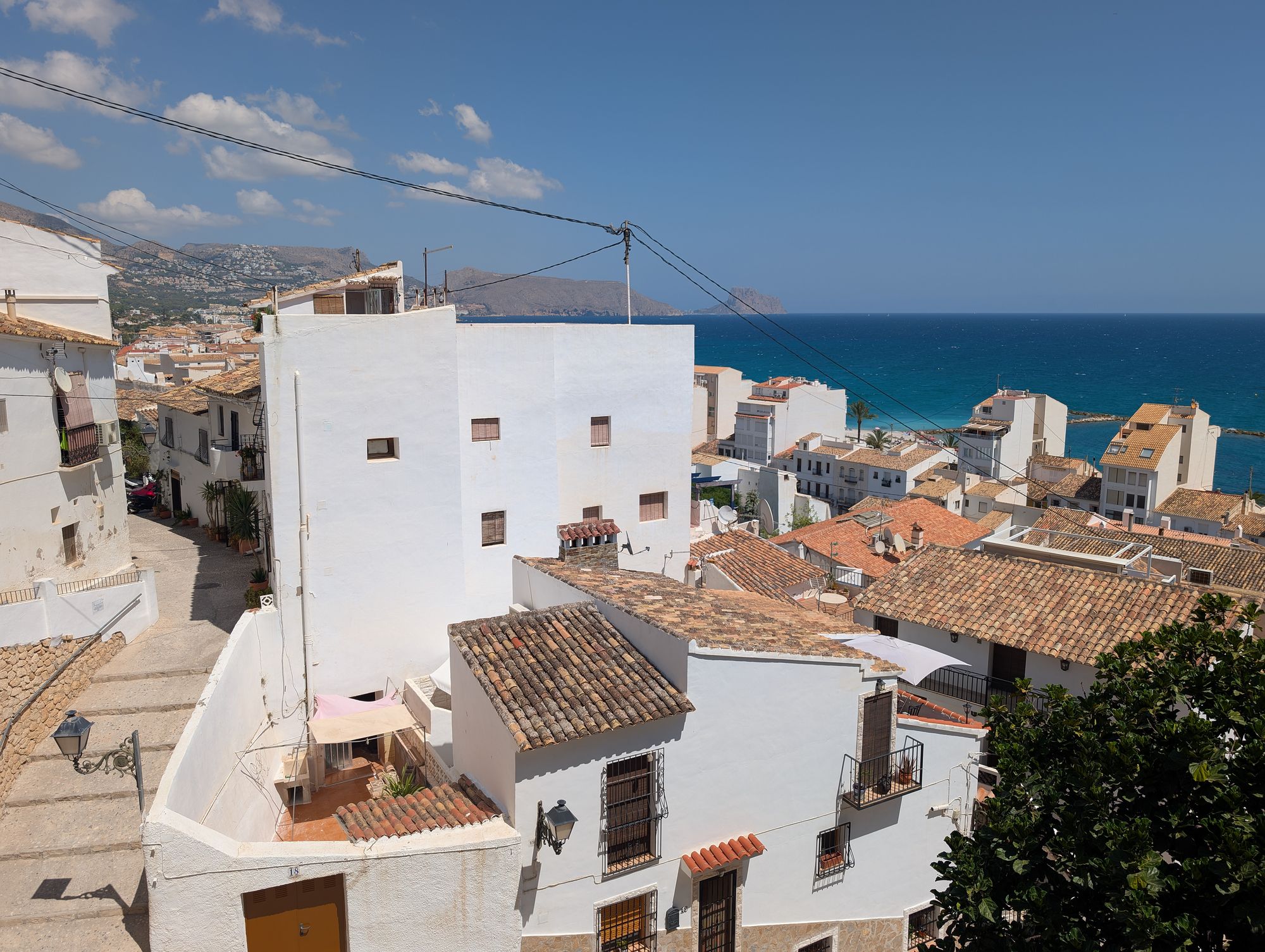
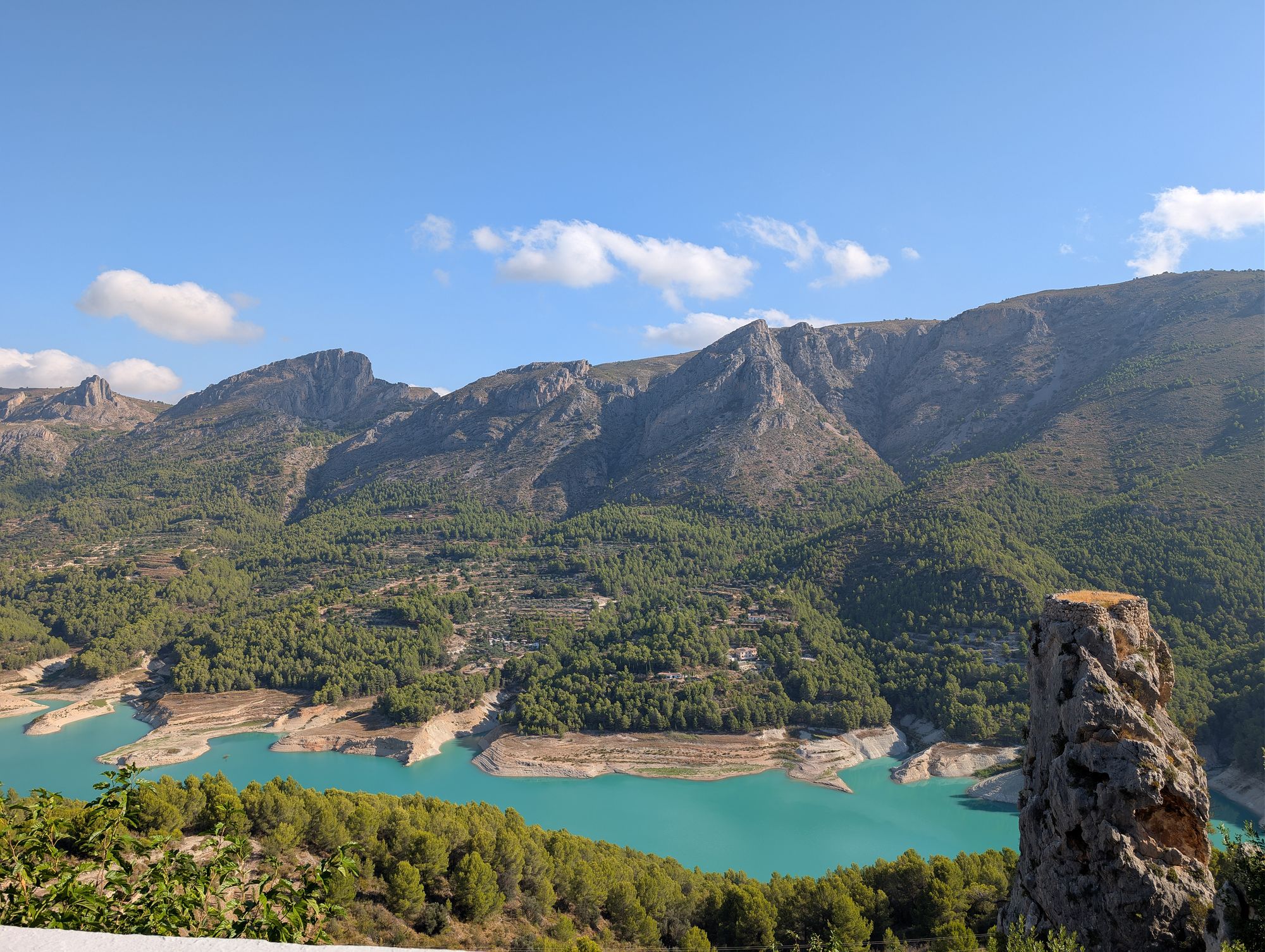

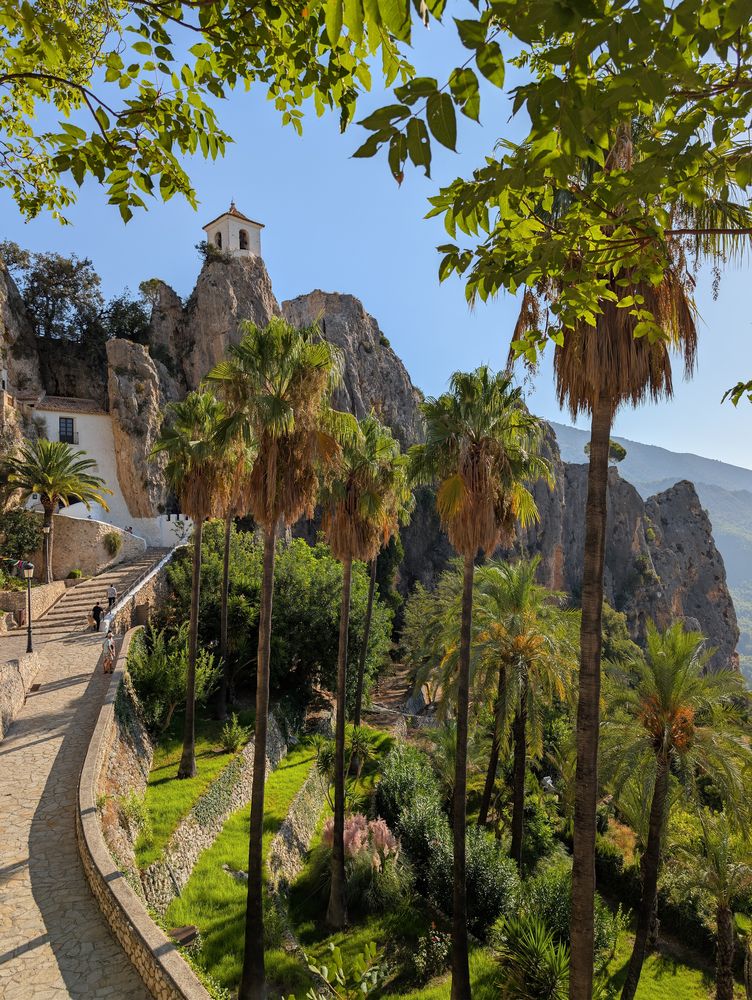
Guadalest is a white medieval Spanish village hidden among mountain cliffs on the crest of a ridge 500 metres above sea level, with a vivid turquoise reservoir in the valley below.
Today it is one of the most visited small villages in Spain — even though only around 280 people live here.
In 2015 it joined the list of Spain’s most beautiful villages, and in 2016 the international association of the most beautiful villages in the world.
Why visit Guadalest?
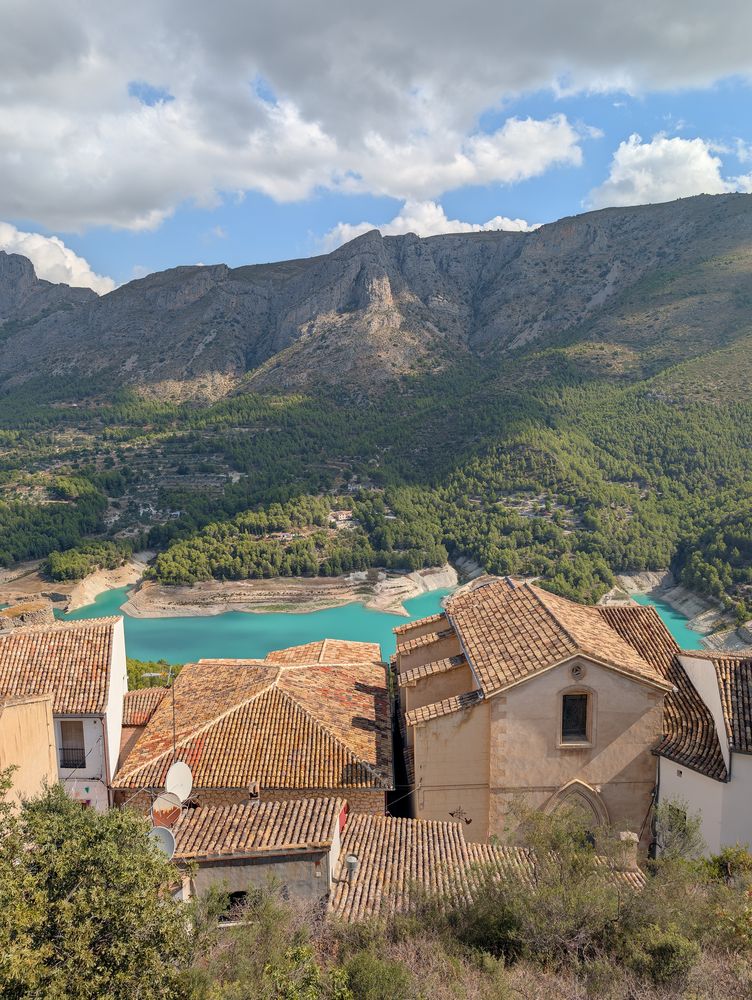
People come here first and foremost for the view.
The old village is built directly on a rocky outcrop that served as a natural fortress in the Middle Ages.
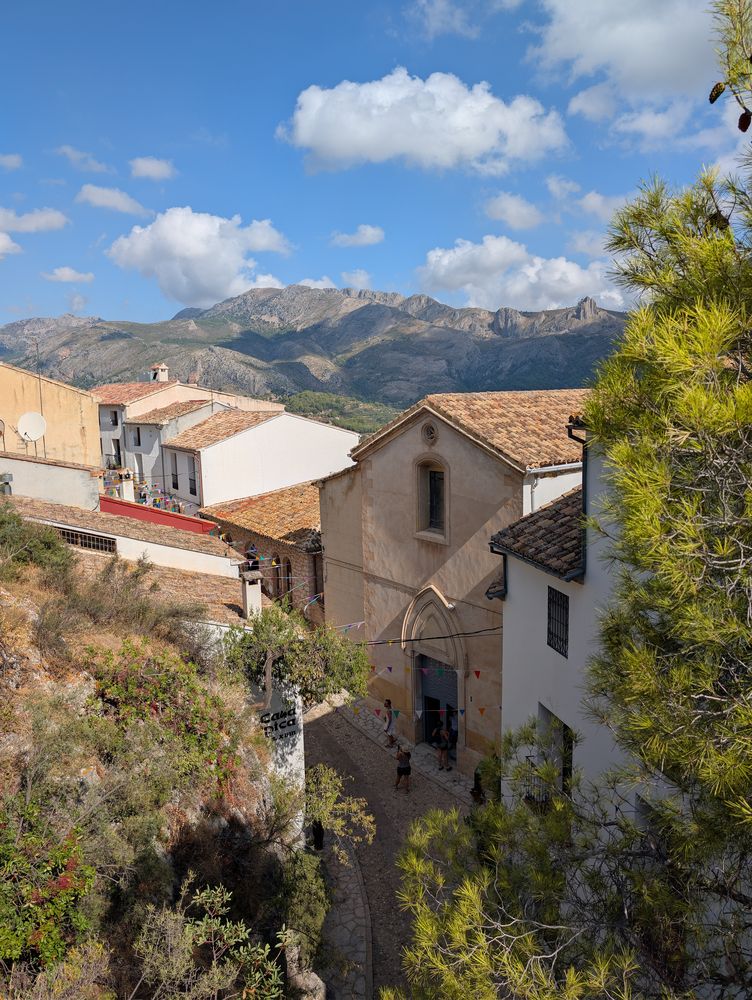
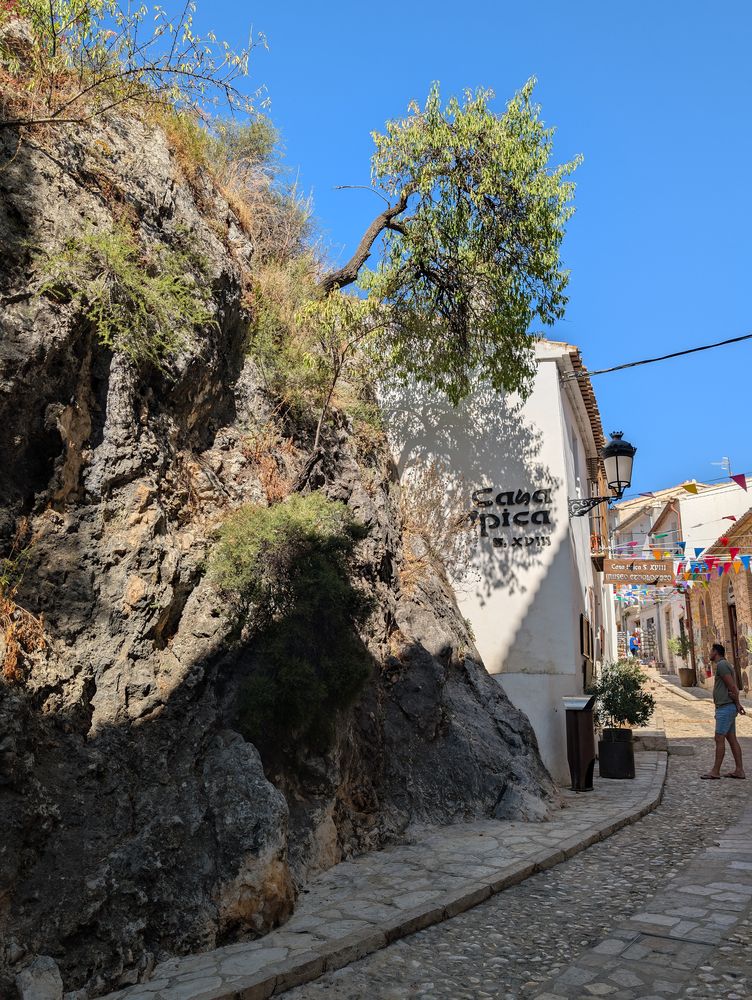
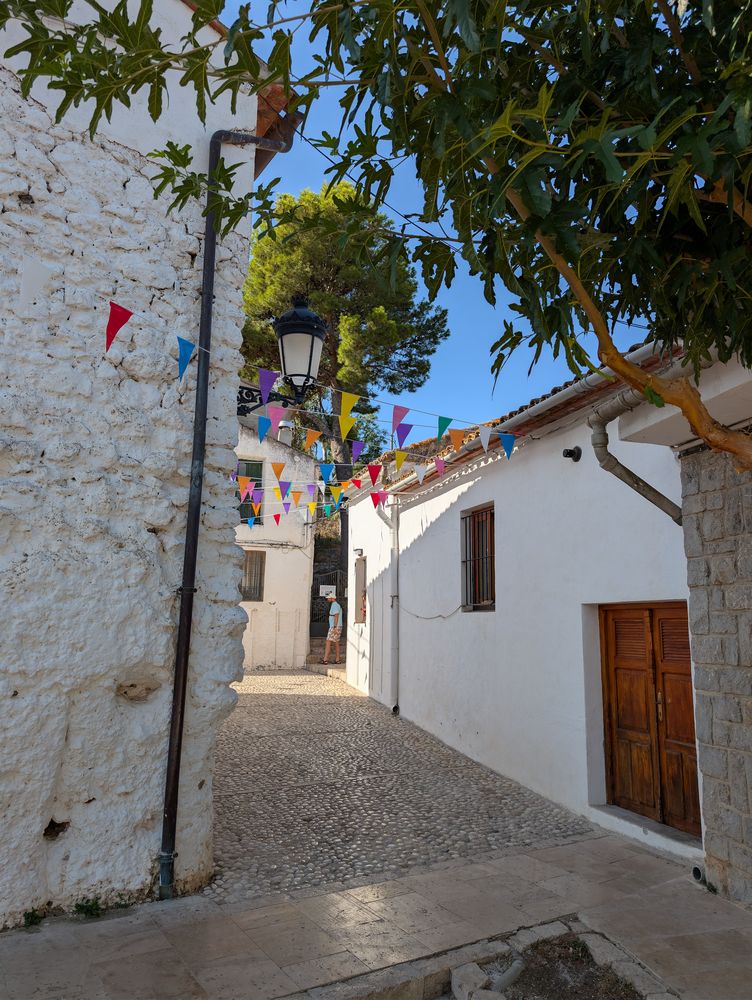
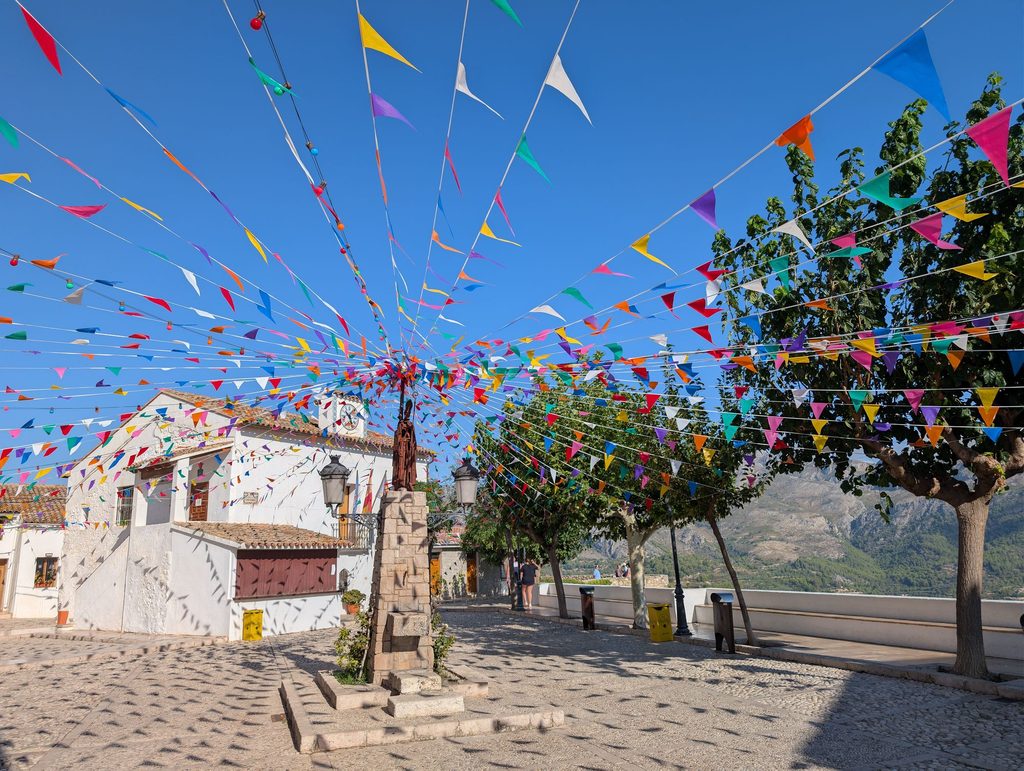
The entrance to the historic quarter runs through a tunnel cut into the rock. Beyond it begin narrow streets, white houses, stone staircases and small squares, with the ruins of the Castillo de San José and the Castillo de la Alcozaiba rising above it all — the two castles that form one of the most recognisable images of Guadalest.
The Castillo de San José stands on the highest rock and once controlled the entire valley. The castle was damaged by earthquakes more than once, and in 1708, during the War of the Spanish Succession, it was severely damaged by an explosion.
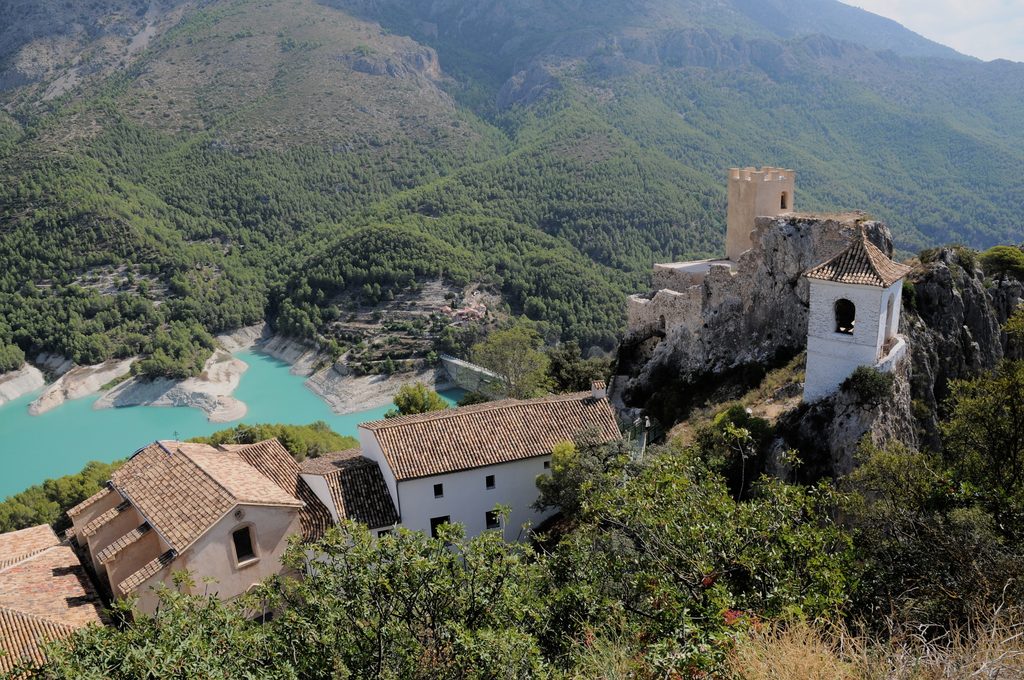
The village’s history begins in the Muslim period. The Castillo de San José was built in the 11th century on the highest part of the rock. After the Christian conquest in the 13th century the territory passed to the Crown of Aragon, though the Muslim community remained a significant part of the population for a long time afterwards. In 1293 the castle was granted to Bernat de Sarrià, later returning to the Crown and then passing to the influential Cardona family. In 1543 the Marquisate of Guadalest was created and granted to Sancho de Cardona.
Curiously, his wife was María Colón de Toledo — a granddaughter of Christopher Columbus.
The Castillo de la Alcozaiba, also built in the 11th century, survives only in fragments: part of its tower remains beside Casa Orduña.
Casa Orduña itself is now a municipal museum, with period interiors, a library and family artefacts.
The reservoir
Guadalest’s most recognisable modern feature is the turquoise reservoir down in the valley.
It was built between 1953 and 1971. Alongside its practical role in supplying water to the region, it created the singular landscape the village is known for.
Museums
Despite its size, the village has a striking number of museums: ethnological, micro-miniature, historic vehicles, and even one devoted to medieval torture.
The Museo Microgigante stands out in particular: its exhibits are so small that they have to be viewed through magnifying instruments — from images painted on a human hair to miniature sculptures.
Nature and trails
All around lies a mountain valley of pine forests, olive and almond trees and Mediterranean herbs.
There are walking and cycling routes, including towards the Sierra de Xortà, which rises to 1,218 metres.
Local produce
Guadalest is worth tasting as well as seeing. Local shops sell produce from the valley and the mountain districts of Alicante: honey, olive oil, jams, nuts, cheeses, cured meats, local wines and liqueurs. Honey and other bee products are especially characteristic of the region, as is olive oil from the Guadalest valley. You will also find traditional sweets, turrón, and products made from nísperos — the loquats grown in this area.
The local cooking is closely tied to mountain tradition too. Restaurants in Guadalest serve olleta de blat, a hearty traditional wheat stew, stuffed peppers, rice with beans and turnip, minxo, and for dessert home-made pastries, mantecados and sweet potato confections.
What’s nearby?
Guadalest is easy to combine with other interesting places in the region, especially if you are travelling by car.
Fonts de l’Algar is a natural complex of waterfalls and natural pools set among the mountains — a good stop if you fancy being near water after a walk around Guadalest.
Polop is a picturesque white village on a mountain slope, known for its old centre, narrow streets and fine views.